{{ currentProduct.name }}  +{{ variants.length - 1 }}
 I shop as
 Stay at Cchobby.com


 +{{ variants.length - 1 }}
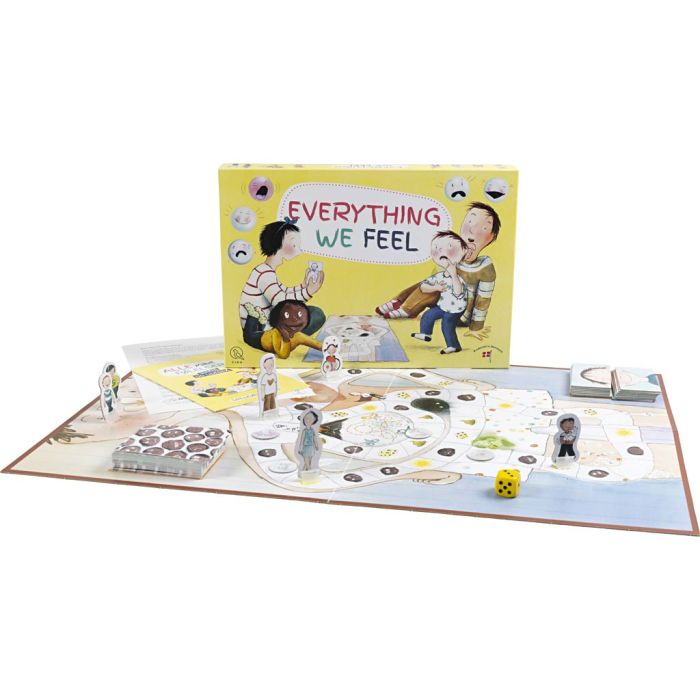
Contains: A3 game board, game instructions, 10 playing pieces, 16 "Build a Face" pieces, 150 task cards, 20 sensory bubbles, 1 die.
Everything We Feel – Inside and Out supports the child's emotional development in a fun and cosy way. Take a journey around the body, talk about and sense where the different emotions live — all while you collect feeling bubbles and solve various tasks together..
The game offers a fun and cosy playing experience while the whole family — children and adults alike — practises talking about and recognising their feelings, both the comfortable and the difficult ones. The long-term goal is to create a family culture where it feels natural to talk about the emotions we experience in everyday life.
The game has been developed in collaboration between Ciha and Rebus Børneformidling, with psychologist Ina Haller and illustrator Lea Letén..
The game is not about being first, but about collecting the feeling bubbles together and having meaningful conversations along the way. When all 10 feeling bubbles have been collected, the game is over.
Read through the game instructions carefully, as they provide tips and tricks for the conversation as well as follow-up questions to use while you play.
Among the 150 picture cards in the game, you will encounter tasks within the following themes:.
| SKU | 890015 |
|---|---|
| Brand | CIHA |
| Sales Quantity | 1 pc |
| Composite Size | 28x40x6 cm |
| EAN | 5744000940052 |
| Brand Responsible | CreativCompany |
{{ getOldPriceFormatted() }}
{{ getOldPriceFormatted() }}
{{ getOldPriceFormatted() }}
Your online craft store
At Creativ Company, we love creativity, play and learning. We have more than 14,000 exciting craft items, which makes us one of the largest online craft stores. Find inspiration for your next craft project in our more than 4,500 free, creative ideas for both children and adults. We sell creative materials and toys to both private individuals, schools/institutions and B2B customers.